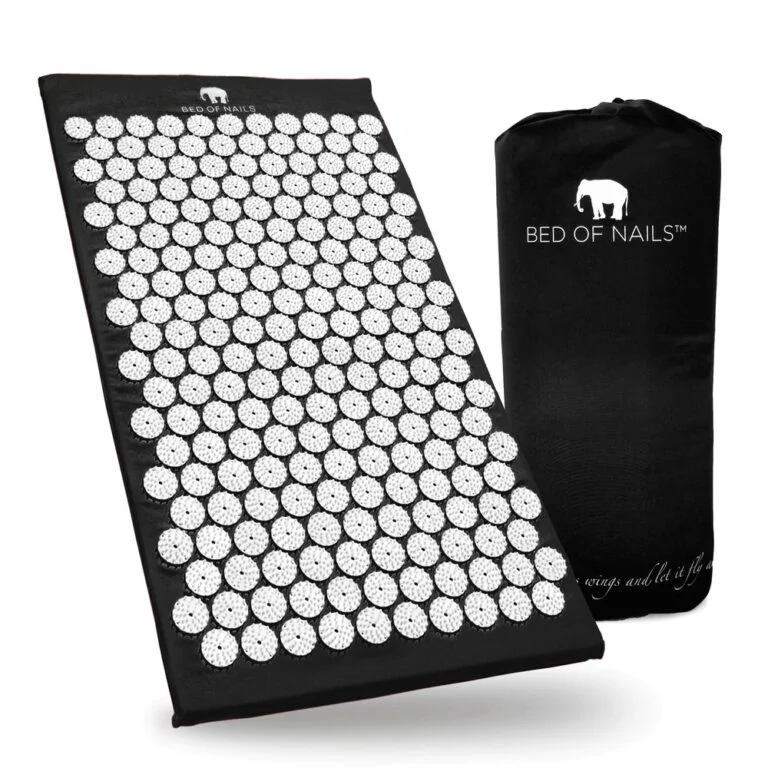
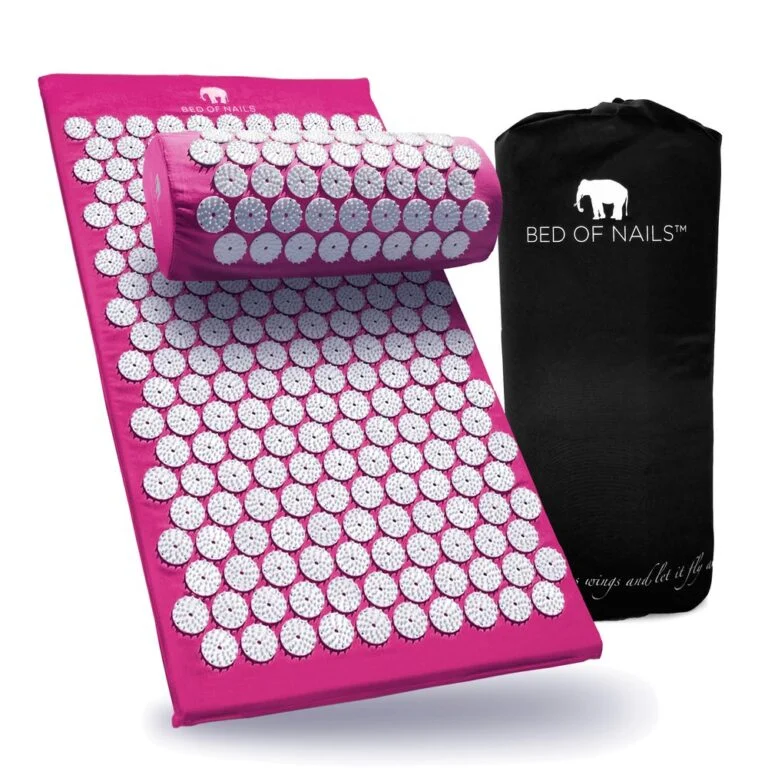
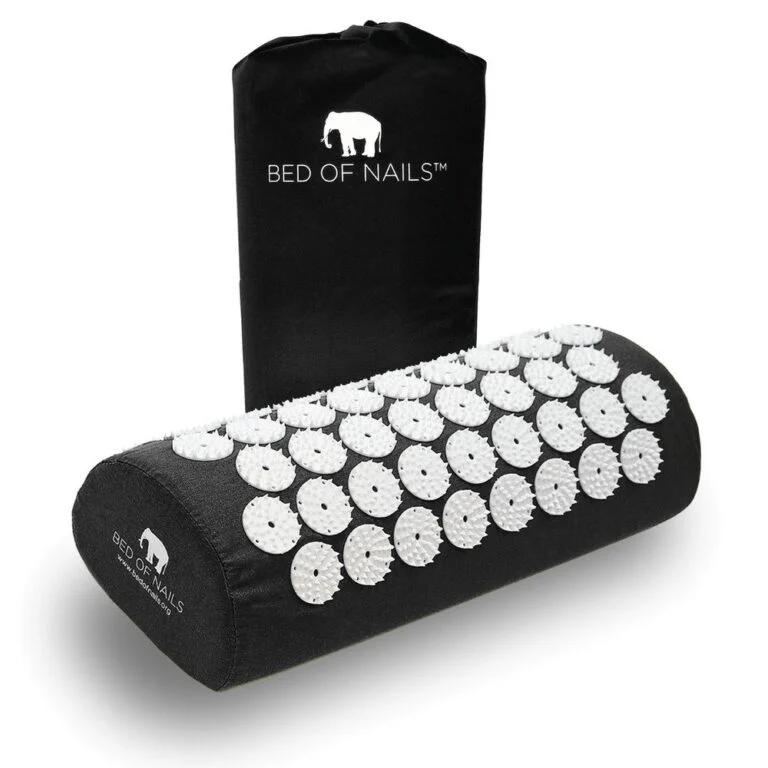
Using an acupressure mat after a workout or yoga class is a simple way to turn your cool-down into a proper pause. Once your breathing has settled, roll your calves and feet with an acupressure roller, wrap a strap around your thighs or arms, then lie on a mat for 10 to 15 minutes. Many people find it helps them unwind and feel tension ease after training.
Key takeaways
- Use acupressure once your heart rate has settled, as part of your cool-down rather than straight after a hard effort.
- A roller suits feet and calves, a strap wraps around limbs, and a mat covers your whole back.
- Ten to fifteen minutes on the mat is plenty after exercise.
- Never use acupressure on an injury, bruise, swelling or broken skin.
- Acupressure is a relaxing ritual; it doesn’t replace stretching, rest, food and water.
Why use an acupressure mat after a workout?
After a run, a gym session or a dynamic yoga class, your body is warm and your mind is often still buzzing. Many people find it hard to switch from “go” to “rest”. An acupressure session gives that transition a clear structure: you stop, lie down, breathe and let the firm sensation of the points hold your attention.
We want to be clear about what it is and isn’t. An acupressure mat is a wellbeing tool for relaxation. It isn’t a treatment for sports injuries or soreness, and it isn’t a replacement for the basics: a proper cool-down, stretching, sleep, food and water. If you’d like the full, honest picture, read our guide to acupressure mat benefits.
Which acupressure tool suits which part of your body?
| Tool | Body area | How long | Tip |
|---|---|---|---|
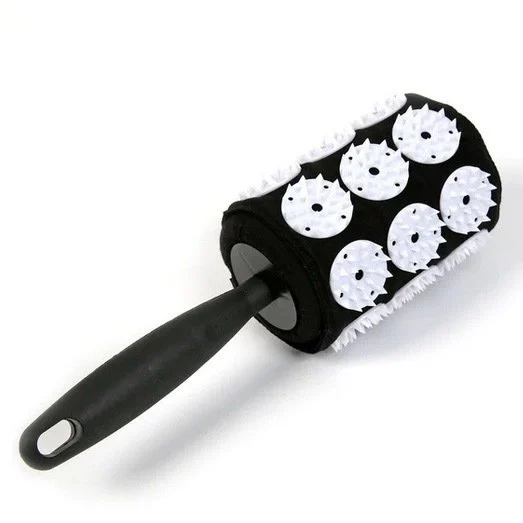
| AcuRoller | Soles of the feet, calves, thighs, forearms | 1 to 2 minutes per area | Control the pressure with your hand; go slowly |
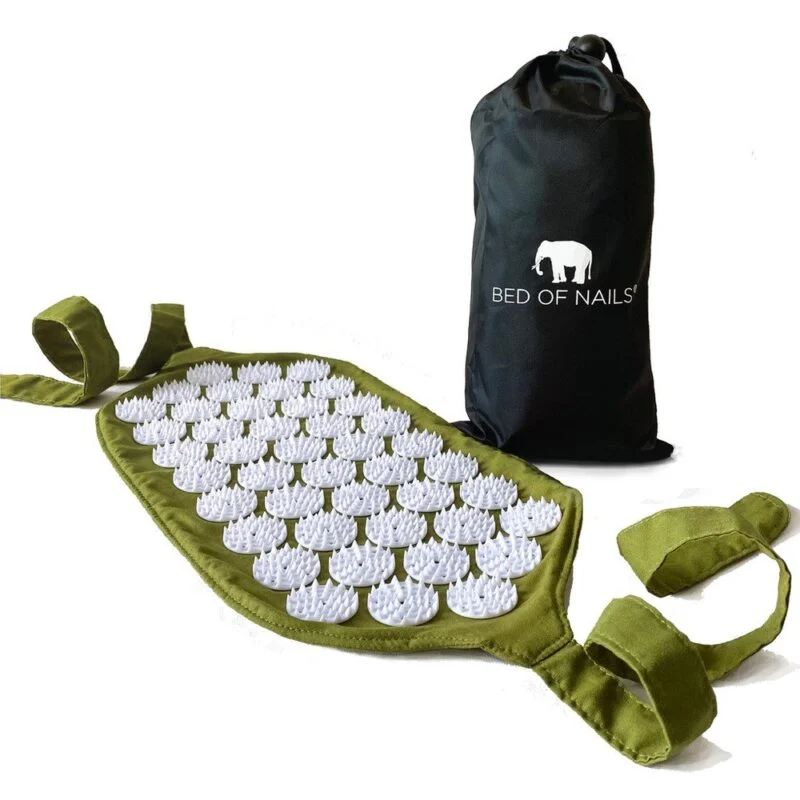
| Acupressure Strap | Thighs, calves, upper arms, shoulders | 2 to 5 minutes per area | Wrap snugly but never tightly |
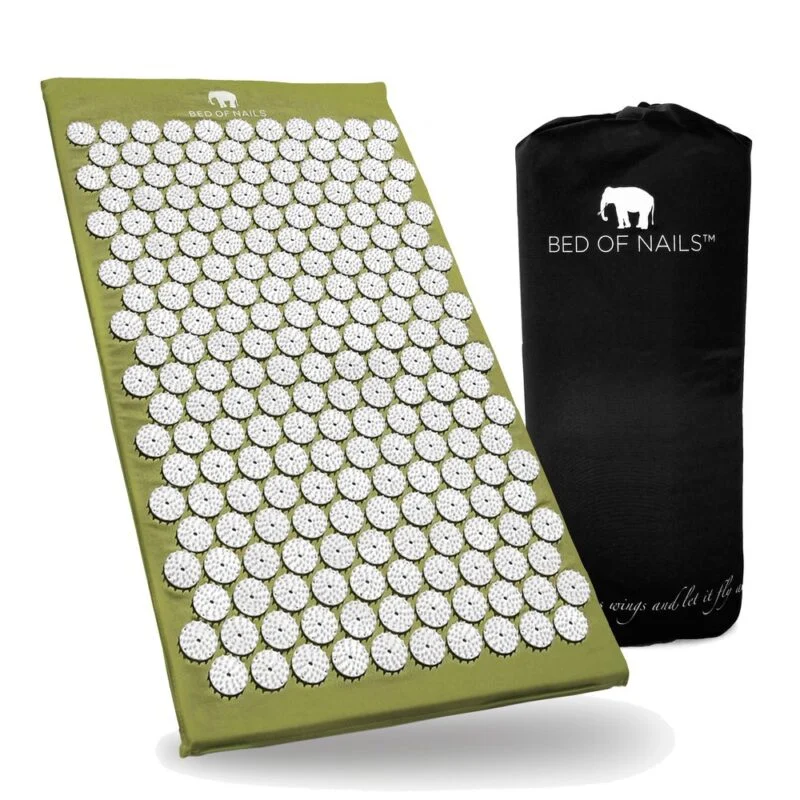
| Acupressure Mat | Upper and lower back | 10 to 15 minutes | Lie down slowly; breathe through the first minute |
| Yoga Mat | A stable base for stretching and your session | Throughout | Lay the acupressure mat on top for a firm, even feel |
What does a 20-minute post-exercise acupressure routine look like?
This routine is designed for after a run, a strength session or a yoga class. Do it somewhere warm and quiet, and have a glass of water to hand.
1. Settle and stretch (5 minutes)
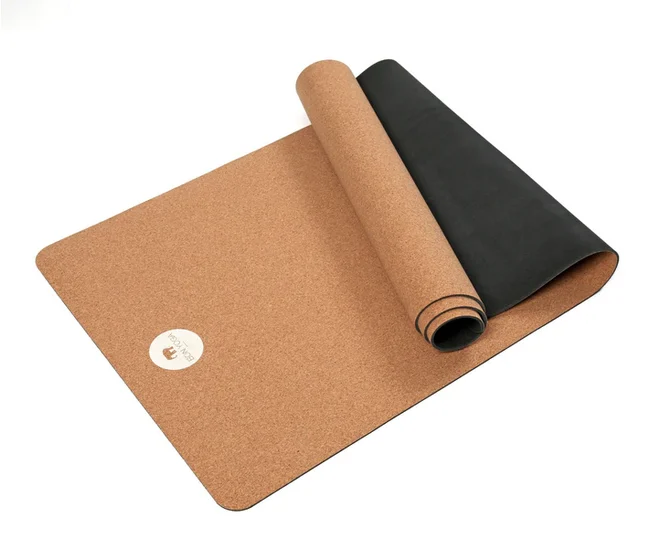
Walk around until your breathing returns to normal, then move to your yoga mat for some gentle stretches. The Bed of Nails Yoga Mat has a cork top for grip and a natural rubber base that keeps it heavy and stable on the floor, so it stays put while you stretch. The brand describes the cork as naturally antimicrobial, which is handy for a mat you use after sweaty sessions.
2. Roll your feet and calves (3 minutes)
Sit on your yoga mat with your legs out in front of you. Roll the Bed of Nails AcuRoller slowly up and down each calf, then sit on a chair and roll it under each foot. Keep the pressure comfortable; it should feel intense but never sharp.
3. Wrap the strap (4 minutes)
Wrap the Bed of Nails Acupressure Strap in green around one thigh, points facing in, and hold it in place for a minute or two. Repeat on the other thigh, then try your upper arms or across your shoulders. Our guide on how to use an acupressure roller and strap covers more positions.
4. Lie on the mat (10 to 15 minutes)
Lay the Bed of Nails Acupressure Mat in green on your yoga mat. Sit on the lower edge, lower your back down slowly and let your arms rest by your sides. Breathe in for four counts and out for six. After the first prickly minute, many people feel a spreading warmth and a sense of letting go.
5. Get up slowly
Roll onto your side, pause, then press up to sitting. Have some water before you head off.
How soon after exercise should you use an acupressure mat?
Wait until your breathing and heart rate have settled, usually five to ten minutes after you finish. Lying straight down after a hard effort can leave some people feeling light-headed when they get up again.
You can also save your session for later in the day. Many people enjoy a short mat session in the evening after a morning workout, as part of a wind-down. If that appeals, try our 15-minute acupressure mat meditation.
When should you skip acupressure after exercise?
A little common sense keeps your routine safe and enjoyable. Skip the acupressure, or avoid the affected area, if you have:
- A fresh strain, sprain, bruise or swelling.
- Broken skin, blisters, chafing or a rash.
- Sunburn after an outdoor session.
- Felt faint, dizzy or unwell during your workout.
If you are pregnant, take blood thinners, have a bleeding disorder, diabetes affecting skin sensation, or any other medical condition, check with your GP before using acupressure. Any injury that isn’t settling should be looked at by your GP or a physiotherapist. Our full guide to acupressure mat safety and side effects explains who should take extra care.
Can you use acupressure tools at the gym or in the office?
Yes. The strap and roller are small enough for a gym bag, and both work just as well after a long day at a desk as after a workout. Our article on acupressure for neck and shoulders at work shows how to use them between meetings. For trips and training camps, the travel mat rolls up small. You can see every piece in our Bed of Nails range.
Related reading
- Acupressure Mat Benefits: What to Honestly Expect
- Desk Tension? Acupressure for Neck, Shoulders and Long Days at Work
- Is an Acupressure Mat Safe? Who Should Avoid It and How to Start Gently
- How to Use an Acupressure Roller and Strap: Feet, Calves, Back and Neck
Frequently asked questions
Can I use an acupressure mat before a workout?
You can, but most people prefer it afterwards or in the evening, when the aim is to slow down. Before exercise, a short, gentle warm-up of movement is a better use of your time. If you enjoy a brief session beforehand, keep it to five minutes and get up slowly before you start moving.
Is an acupressure roller better than a foam roller?
They do different jobs. A foam roller uses your body weight over a broad surface, while an acupressure roller is handheld and covered in points, so it gives a more focused sensation and lets you control pressure with your hand. Many people keep both and use the acupressure roller on feet, calves and forearms.
Can I put an acupressure mat on top of a yoga mat?
Yes, and it’s a good idea on hard floors. A yoga mat underneath gives a stable, non-slip base and a firm, even surface, so the acupressure mat stays flat while you lie on it. It also keeps the mat off cold floors, which makes a post-workout session more comfortable.
How often can I use acupressure if I train every day?
Most healthy adults can use an acupressure mat, strap or roller daily. Keep sessions short, ten to fifteen minutes on the mat and a few minutes per area with smaller tools, and give your skin a break if marks are slow to fade. Avoid any area that is injured, bruised or sore to the touch.