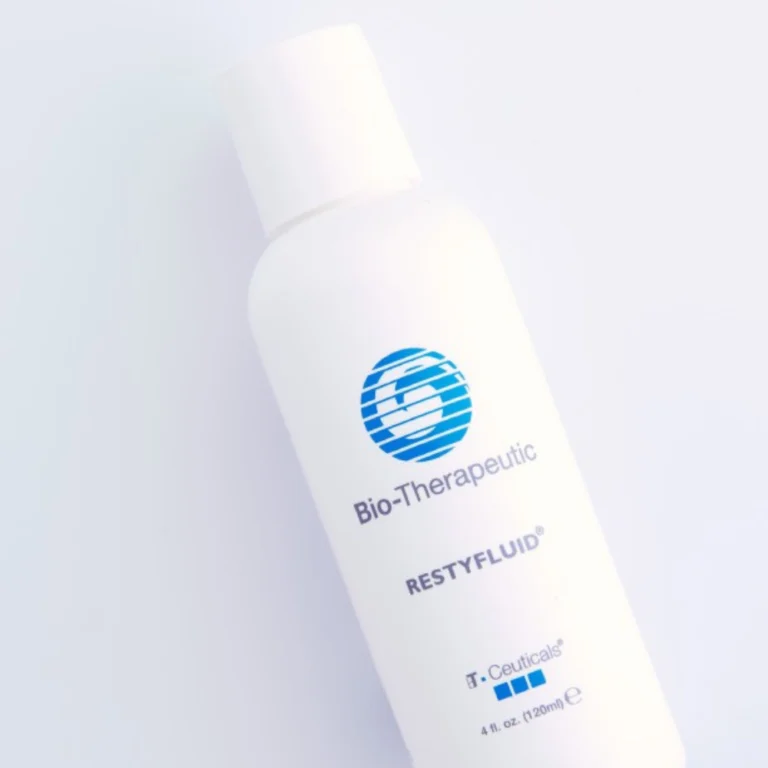
A conductive gel for microcurrent is a water-based layer that lets the tiny current travel from the probes across your skin evenly and comfortably. Without it, contact is patchy, sessions can prickle and the device cannot do its job. The best options are water-based, slippery enough to glide, slow to dry and hydrating, such as a hyaluronic fluid like Restyfluid.
Key takeaways
- Microcurrent needs a conductive medium: dry skin is a poor conductor and makes sessions uncomfortable.
- Choose water-based formulas; oils, balms and silicone-heavy products can block the current.
- Apply generously, one area at a time, and top up as soon as the layer starts to feel tacky.
- A multitasking fluid can work as a toner, a serum booster and a conductive medium in one.
- Avoid using microcurrent over freshly applied strong actives or irritated skin.
Why does microcurrent need a conductive gel?
Microcurrent devices send a very low-level current, measured in microamps, between two probes. For that current to pass through the skin’s surface between them, there needs to be a good conductor in contact with both the probes and the skin. Water-based gels do that job; dry skin does not.
Without enough gel, the current tends to concentrate where contact is strongest, which is why people feel a sharp prickle or flicker. You also lose consistency, as parts of the face receive less of the session than others. Our complete guide to microcurrent facials at home explains how the whole routine fits together.
What makes a good conductive gel for microcurrent?
A good conductive medium is more than slippery. Look for these qualities.
- Water-based. Water and humectants conduct well; oils do not.
- Slow to dry. It should stay on the surface for the time it takes to work an area.
- Enough glide. The probes should move smoothly without dragging the skin.
- Kind to skin. Hydrating ingredients such as hyaluronic acid (a humectant that draws water into the surface layers) are a bonus because you are leaving it on.
- Easy to finish. It should either press in comfortably or wipe away cleanly afterwards.
Which conductive gels and media can you use?
| Option | How well it works | Notes |
|---|---|---|
| Hyaluronic conductive fluid (e.g. Restyfluid) | Very well | Water-based, hydrating, doubles as toner and serum booster |
| Dedicated device gel from your device brand | Very well | Designed for the job; check the manual’s recommendation |
| Plain aloe vera gel | Variable | Can dry quickly; formulas differ widely |
| Water-based serum | Variable | Often sinks in too fast; needs frequent topping up |
| Face oil, balm or rich cream | Poorly | Oils are poor conductors; use after your session instead |
| Silicone-heavy primer | Poorly | Can create a barrier between probe and skin |
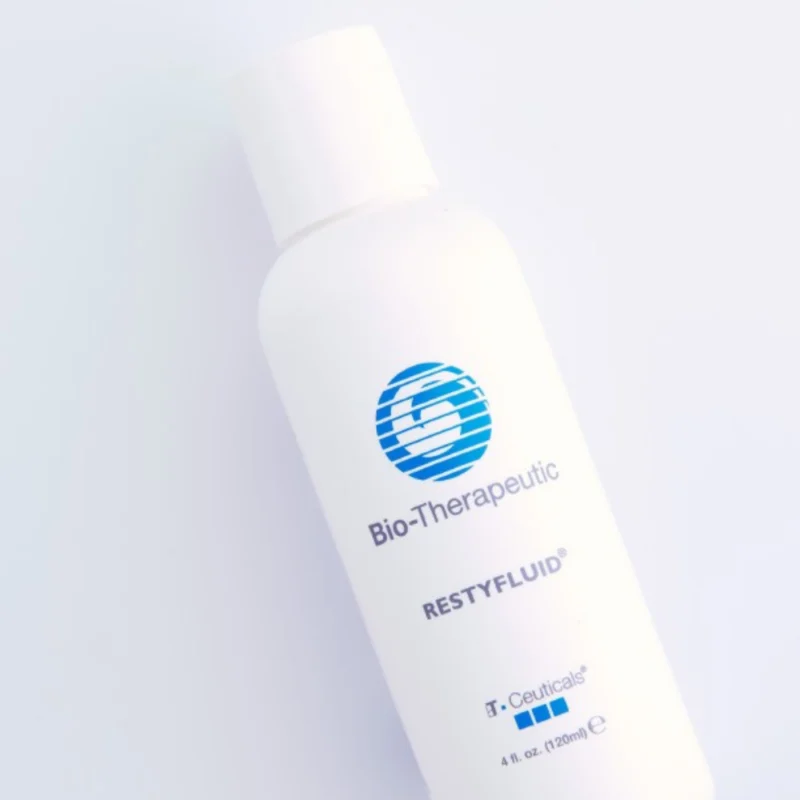
Restyfluid from Bio-Therapeutic combines low molecular weight sodium hyaluronate with peptides. It works as a toner, a pre-serum booster or a conductive medium for microcurrent and ultrasonic devices, so one bottle covers several steps.
How much conductive gel should you apply?
More than you think. The most common beginner mistake is a thin layer that disappears into the skin within a minute.
- Start with clean, dry skin, free of oil and makeup.
- Apply a visible, generous layer to one area only, such as one side of the jaw.
- Work that area with your device until the layer starts to feel tacky.
- Add more before moving on, and repeat area by area.
- Afterwards, press in any leftover hydrating fluid or wipe away excess, then continue your routine.
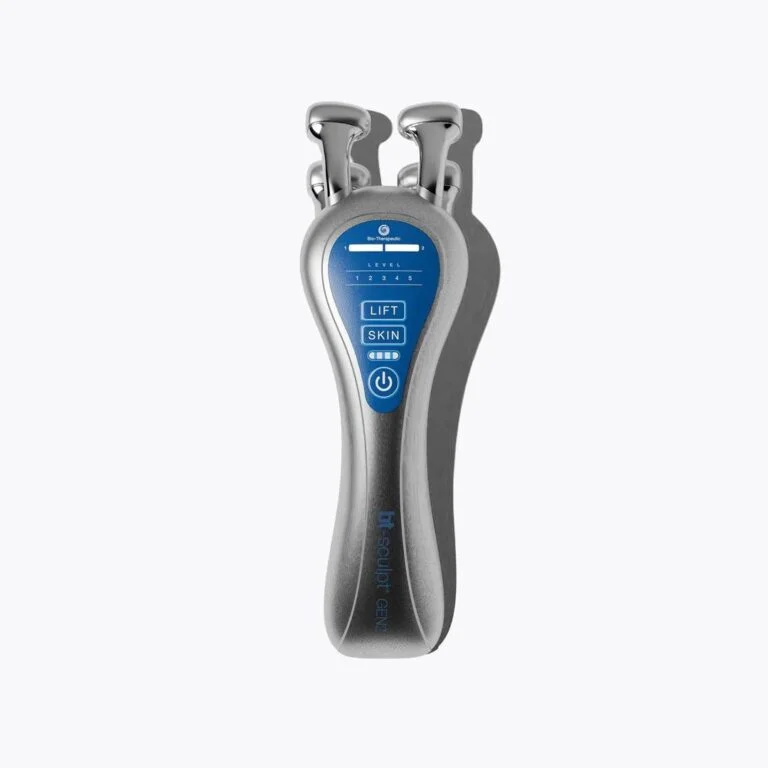
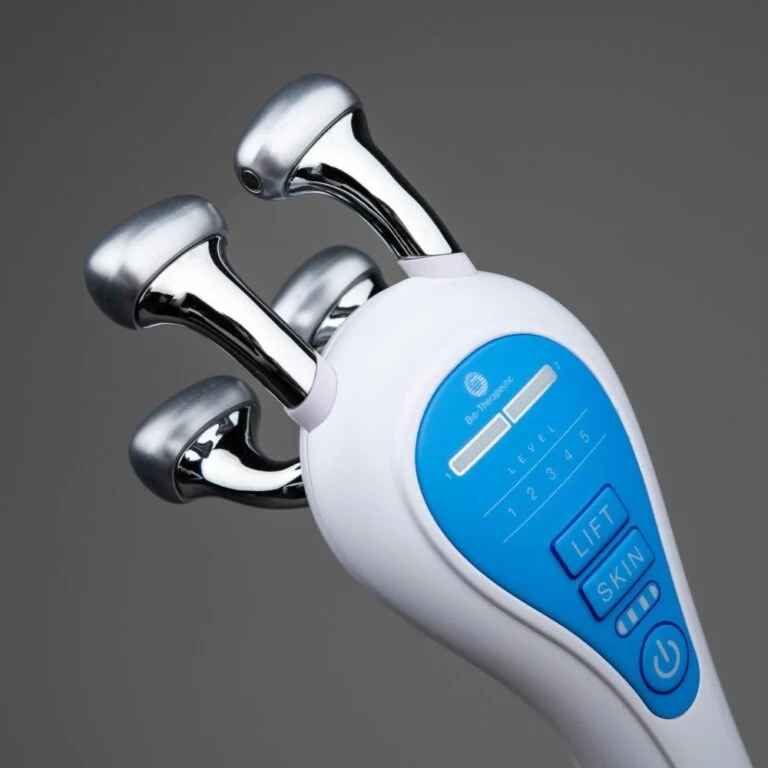
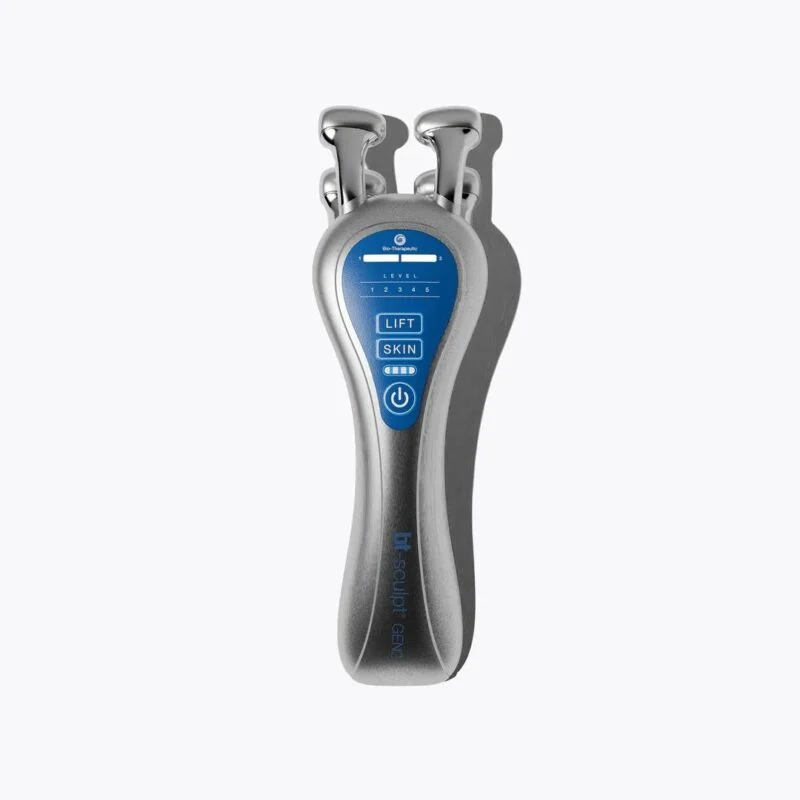
If your device gives contact feedback, as the bt-sculpt GEN2 does with its audio signal, use it as a cue: lost contact often simply means you need more gel. Our step-by-step guide to using the bt-sculpt GEN2 shows exactly where this fits.
Can you use microcurrent over a face masque?
Some people like to pair microcurrent with gel masques, either before or after a session. A hydrating gel masque such as the Hyaluronic Collagen Resilience Masque, with hyaluronic acid, peptides and niacinamide, makes a cooling final step, and the two-part marine algae Hyaluronic Delivery Face Masque is another option.
If you want to use a device over a masque rather than after it, check the instructions for both the masque and the device first. The simplest, most reliable routine is gel during, masque after. For more on choosing masques, see our guide to sheet masks, biocellulose and gel masques.


What should you avoid under a microcurrent device?
- Oils and balms. Save facial oils and cleansing balms for afterwards or for a different routine.
- Strong actives straight before a session. Exfoliating acids and retinoids can leave skin more reactive. If you use a retinal or retinol, run microcurrent on a different evening or in the morning; our retinal vs retinol guide explains why those ingredients make skin more sensitive.
- Freshly exfoliated or irritated skin. Wait until any redness or tingling has settled.
- Broken skin. Never use a device over cuts, inflamed spots or sunburn.
If you are unsure whether microcurrent is right for you at all, read our microcurrent safety checklist before you start.
You can see every device, fluid and masque in one place on our Bio-Therapeutic page. We offer free UK mainland delivery over £80.
Related reading
- Microcurrent Facials at Home: The Complete UK Guide
- How to Use the bt-sculpt GEN2: Step-by-Step Routine
- Hyaluronic Acid: What It Does and How to Use It Properly
- Retinal vs Retinol: The Difference and How to Start
Frequently asked questions
Can I use water instead of conductive gel for microcurrent?
Water does conduct, but it evaporates and runs off the face within seconds, so contact quickly becomes patchy and sessions can prickle. A water-based gel or fluid holds the moisture on the skin for longer and lets the probes glide. If you are caught without one, it is better to skip the session than to use a device on dry or barely damp skin.
Can I use ultrasound gel for a microcurrent facial?
Some people use plain ultrasound gel because it is water-based and conductive, but it is not designed for facial skin and offers no hydration. A cosmetic conductive fluid made for face devices is more pleasant to use and adds benefit while you work. Always patch test anything new on a small area first, and follow your device manual’s recommendation.
Why does my conductive gel dry out so quickly?
Some formulas absorb fast, especially on dehydrated skin or in warm, centrally heated rooms. Work on one small area at a time, apply a more generous layer and top up as soon as it feels tacky. A light mist of hydrating toner over the area can help refresh the layer before you add more gel.
Can I use the same conductive gel for an ultrasonic skin scrubber?
Often, yes. Restyfluid works as a conductive medium for both microcurrent and ultrasonic devices, and it doubles as a toner. In infusion mode, an ultrasonic scrubber is used over a serum or moisturiser, while exfoliation mode needs damp skin. Check your device’s instructions for which medium suits each mode.