Retinal and retinol are both forms of vitamin A used in skincare to help the look of fine lines, uneven texture and tone; the difference is that retinal is one conversion step closer to the form skin actually uses, so it tends to work faster at lower strengths. Whichever you choose, start slowly, use it at night and wear a broad-spectrum SPF every morning.
Key takeaways
- Retinol and retinal (retinaldehyde) both belong to the retinoid family of vitamin A ingredients.
- Skin converts retinol to retinal, then to retinoic acid; retinal skips one step.
- Retinal is often chosen by people who want visible results without jumping to prescription strength.
- Both can cause dryness and flaking at first, so introduce them gradually and keep moisturising.
- Retinoids increase sun sensitivity, and they are not recommended during pregnancy or breastfeeding.
What is the difference between retinal and retinol?
Both are retinoids, a family of ingredients derived from vitamin A. Your skin cannot use retinol or retinal directly. It converts them, step by step, into retinoic acid, the form that acts on skin cells.
The conversion chain looks like this: retinol becomes retinal, and retinal becomes retinoic acid. Because retinal is already one step along, less is lost in conversion, which is why retinal products often feel more effective at lower concentrations. Retinoic acid itself, such as tretinoin, is a prescription-only medicine in the UK, so cosmetic products use retinol, retinal and related forms instead.
Retinal vs retinol: which is stronger?
| Retinol | Retinal (retinaldehyde) | Bakuchiol | |
|---|---|---|---|
| What it is | Vitamin A retinoid | Vitamin A retinoid | Plant-derived ingredient, not a retinoid |
| Conversion steps to retinoic acid | Two | One | None; works differently |
| Speed of visible results | Gradual | Often faster | Gentle and gradual |
| Likelihood of initial dryness | Moderate | Moderate | Low |
| Best for | First-time users wanting a gentle start | People wanting more visible results from a cosmetic retinoid | Sensitive skin, or as a partner to a retinoid |
“Stronger” is not always better. A well-formulated retinal used consistently will do more for your skin than a high-strength product you abandon after a week of irritation.
What does a retinoid actually do for skin?
Retinoids encourage skin to renew its surface more efficiently. Over time that can help:
- skin look smoother and feel softer in texture;
- fine lines appear less noticeable;
- uneven tone and patches of pigmentation look more even;
- pores look clearer and less congested.
Results build over months, not days. Most people notice a smoother texture after several weeks, with tone and fine lines following later.
How do you start using retinal without irritation?
The first few weeks are when people give up, usually because they did too much too soon. Dryness, flaking or mild tingling while skin adjusts is common. This plan keeps it manageable.
- Weeks 1–2: use your retinal two evenings a week, on clean, completely dry skin.
- Weeks 3–4: if skin is comfortable, move to every other evening.
- From week 5: increase to most evenings if you wish, or stay at every other night.
- Every night: follow with a nourishing moisturiser.
- Every morning: apply a broad-spectrum SPF 30 or higher.
Use a pea-sized amount for your whole face. Avoid the corners of the nose, the lips and close to the eyes. If skin becomes red, sore or flaky, take a few nights off, then restart at a lower frequency. The “sandwich” method, applying moisturiser before and after your retinoid, can also help sensitive skin.
Which retinal product should you choose?
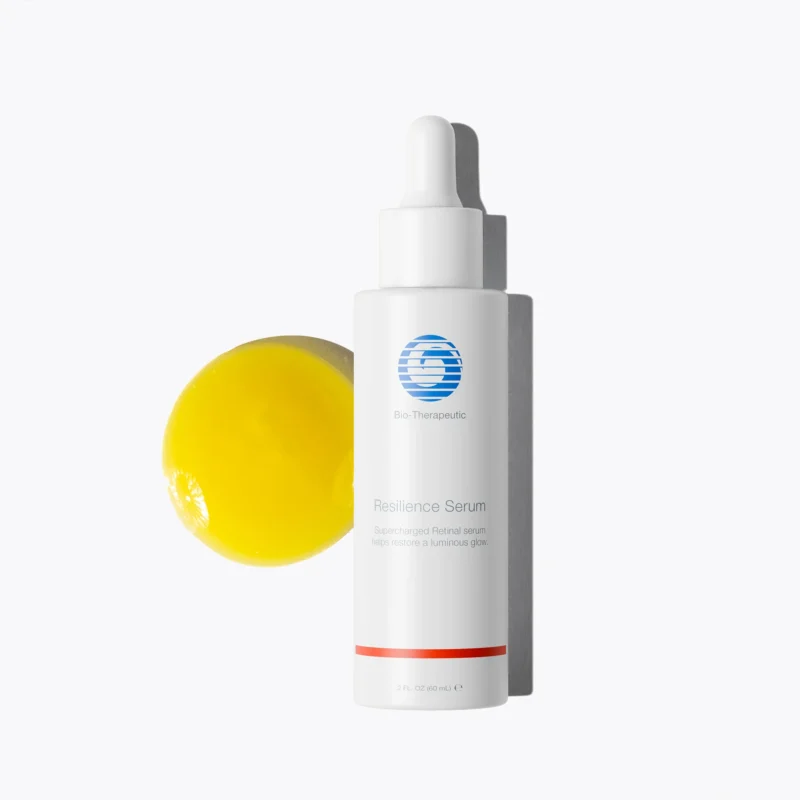
Resilience Serum combines stabilised retinal with bakuchiol, peptides and supporting antioxidants including astaxanthin, EGCG from green tea and black currant seed oil, plus acetyl zingerone. Pairing retinal with soothing and antioxidant ingredients is designed to make it easier to live with day to day. Use it in the evening only.
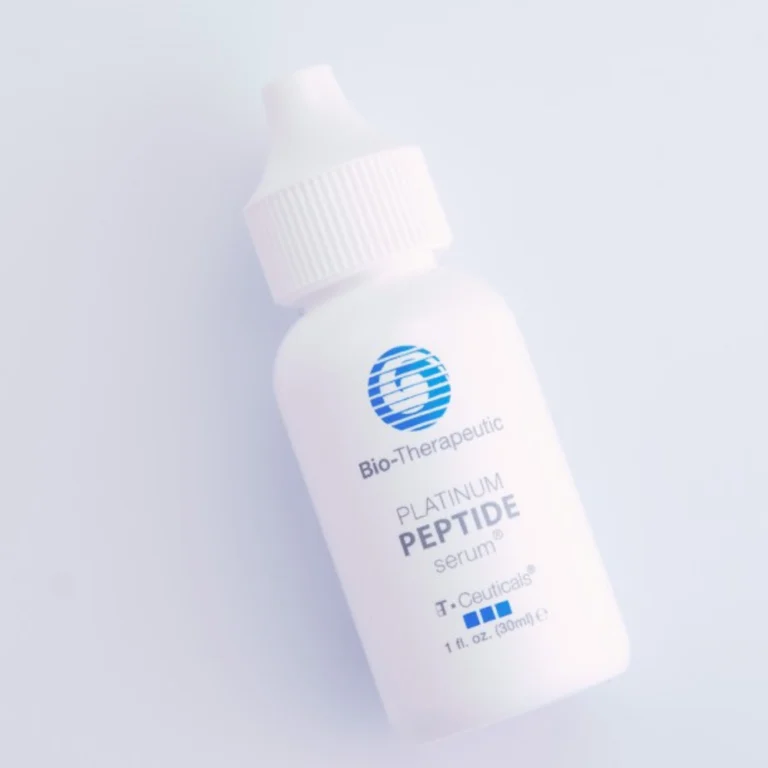
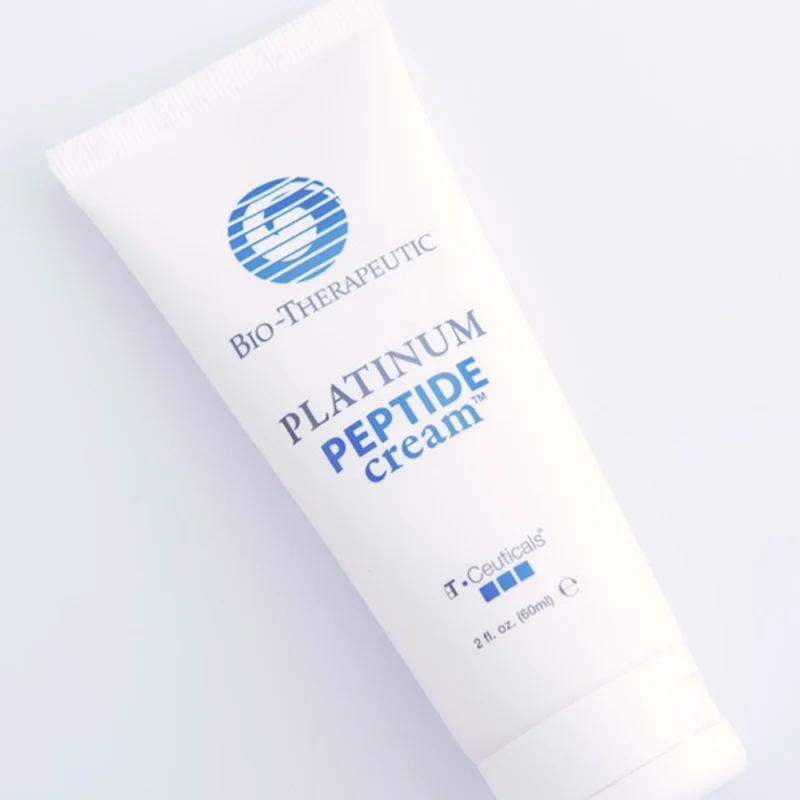
Follow it with Platinum Peptide Cream, a rich moisturiser with serum-strength peptides and barrier lipids, which helps skin feel comfortable while it adjusts. The next morning, finish your routine with Shade SPF 30 Climate Control, a broad-spectrum, non-greasy sunscreen suitable for sensitive skin.
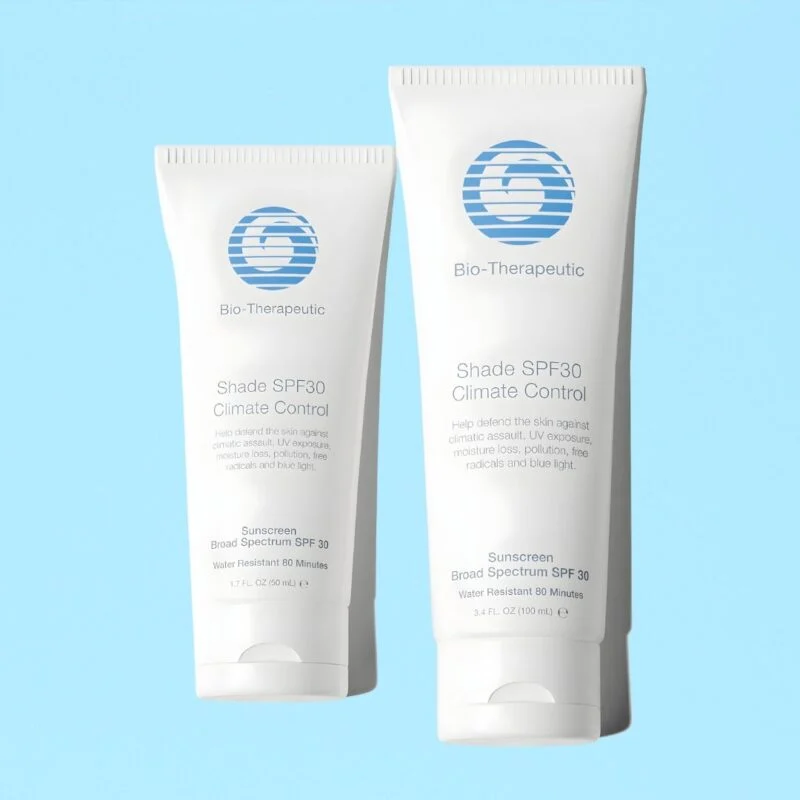
For where retinal sits among your other evening steps, see our evening skincare routine order. You can browse the full range on our Bio-Therapeutic page.
Why do you need SPF when using retinal or retinol?
Retinoids make skin more sensitive to the sun, partly because they encourage fresher cells at the surface. Using a retinoid without daily SPF also undermines the reason you are using it, because UV exposure is the biggest outside influence on uneven tone and visible ageing.
In the UK, UVA reaches us all year, including on cloudy days and through windows. Our article do you really need SPF every day in the UK? explains why it is worth the habit.
Who should avoid retinoids, and what can you use with them?
Who should be cautious
Retinoids are not recommended during pregnancy or while breastfeeding, so speak to your GP or midwife about alternatives. If you have a skin condition, are using prescription skin treatments, or have very reactive skin, check with your GP or pharmacist first. Pause retinoids for a few days before waxing, peels or other professional facial treatments.
What pairs well
Hyaluronic acid, peptides, niacinamide and ceramides all work well alongside retinal. A hydrating mist such as Aquafuse Hyaluronic Repair, which combines hyaluronic acid with three ceramides and niacinamide, is a comfortable first step on retinal nights; let it dry fully before applying your retinoid. Keep exfoliating acids and vitamin C on different nights or in your morning routine. For mature skin, our routine for your 40s and 50s shows how retinal fits with peptides and eye care, and our guide to peptides explains why they make good partners.
Related reading
- Evening Skincare Routine: What to Use and in Which Order
- Skincare in Your 40s and 50s: A Routine That Works Harder
- Do You Really Need SPF Every Day in the UK?
- Peptides in Skincare, Explained Without the Jargon
Frequently asked questions
Can I switch from retinol to retinal?
Yes. If your skin has been comfortable with retinol for a few months, retinal is a natural next step. Treat it as a new product: start two or three evenings a week, keep moisturising well and build up gradually. Do not use both on the same night, as doubling up on retinoids increases the chance of dryness and irritation.
Is retinal suitable for sensitive skin?
Some people with sensitive skin use retinal happily, especially in formulas that include soothing ingredients and when they build up slowly. Start once or twice a week, apply over a moisturiser if needed and avoid using exfoliating acids on the same nights. If your skin barrier is currently stressed, let it recover before introducing any retinoid.
What age should you start using retinal?
There is no set age. Many people start in their late 20s or 30s when they first notice changes in texture or tone, while others begin later and still see benefits. What matters more than age is starting gently, using it consistently at night and wearing a broad-spectrum SPF every single morning while you use it.
Can I use retinal and vitamin C together?
Yes, just not at the same moment. The simplest approach is vitamin C in the morning, where its antioxidant support works alongside your SPF, and retinal in the evening. This keeps both ingredients in your routine while reducing the chance of irritation from layering two actives at once.