For most people, vitamin C works best in the morning: applied after cleansing and before your moisturiser and SPF, its antioxidant support complements sun protection and helps skin look brighter through the day. It can be used at night too, but if you also use a retinoid, keep vitamin C for the morning and the retinoid for the evening.
Key takeaways
- Vitamin C is an antioxidant that helps skin look brighter and more even in tone.
- Morning use pairs naturally with SPF; it supports sun protection but never replaces it.
- Pure L-ascorbic acid is potent but unstable; derivatives such as ascorbyl glucoside are gentler and more stable.
- Vitamin C does not have to come in a serum; toners, moisturisers and masques can deliver it too.
- It pairs well with niacinamide, hyaluronic acid and peptides; keep retinoids for the evening.
What does vitamin C do for your skin?
Vitamin C is one of the best-known antioxidants in skincare. Antioxidants help neutralise free radicals, unstable molecules generated by UV and pollution that contribute to dullness and visible ageing.
In practical terms, regular use of vitamin C can help:
- skin look brighter and more radiant;
- uneven tone and dark marks appear less noticeable;
- skin look fresher in polluted city air;
- your daily SPF do its job, by adding antioxidant support underneath it.
Should you use vitamin C in the morning or at night?
Morning is the usual recommendation, for three reasons. It works alongside sunscreen during the hours your skin meets UV and pollution. Most people use retinoids at night, so morning keeps the two apart. And brightening products give a fresh look just when you want it.
Evening use is not wrong. If you prefer a minimal morning routine, or your vitamin C product is a rich cream, applying it at night is fine. What matters most is using it consistently.
| Morning | Evening | |
|---|---|---|
| Main benefit | Antioxidant support alongside SPF; instant brightness | Brightening while you sleep |
| Works with | Hyaluronic acid, niacinamide, moisturiser, SPF | Hyaluronic acid, peptides, moisturiser |
| Avoid layering with | Nothing in particular; always finish with SPF | Retinoids and strong exfoliating acids on the same night |
| Best for | Most people | Minimal morning routines; vitamin C in a richer cream |
What are the different forms of vitamin C?
Vitamin C appears on labels under several names, and the form affects how it feels and how long it stays effective.
L-ascorbic acid
The pure form and the most researched. It is effective, but it oxidises quickly when exposed to air, light and heat, and it needs a low pH that can sting sensitive skin. If a serum turns dark orange or brown, it has oxidised.
Stable derivatives
Ingredients such as ascorbyl glucoside, sodium ascorbyl phosphate and magnesium ascorbyl phosphate are converted by the skin into active vitamin C. They are more stable in a formula and gentler, which makes them suitable for daily use and sensitive skin.
Encapsulated vitamin C
Some formulas wrap vitamin C in a protective coating that helps keep it stable until it meets your skin.
Which vitamin C products should you use?
You do not need a dedicated vitamin C serum to benefit. Bio-Therapeutic builds vitamin C into toners, a moisturiser and a masque, so it slots into steps you already do.
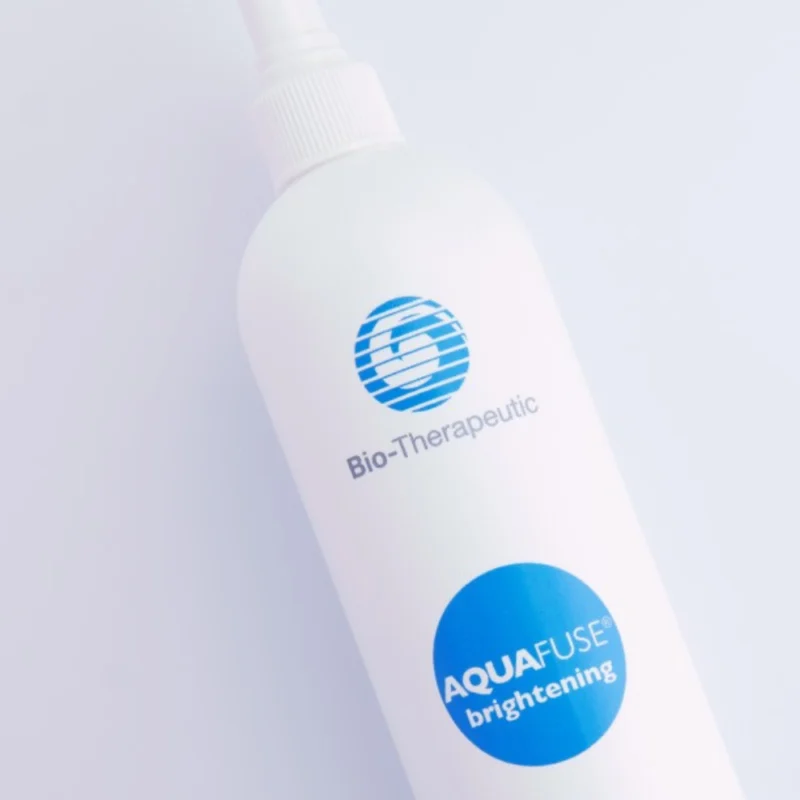
- Aquafuse Brightening Toner: ascorbyl glucoside, a stable vitamin C, with niacinamide and aloe. Use it after cleansing in the morning.
- Aquafuse Brighten + Hydrate: a spray toner with stabilised vitamin C, niacinamide, licorice root, antioxidant fruit extracts, two peptides and sodium hyaluronate. Handy for a quick morning mist.
- Brighten + Hydrate Cream: a medium-weight moisturiser with encapsulated vitamin C, gold and glutathione, so your moisturiser does the brightening too.
- bt-infusion Brightening Masque: a biocellulose sheet with niacin, licorice, antioxidants and hyaluronic acid for a weekly radiance boost.
If uneven tone is your main concern, Platinum Brightening Cream takes a different route, with arbutin, palmitoyl tripeptide-38, lactic acid and multivitamins. It works well as an evening partner to a morning vitamin C routine.
 Bio-Therapeutic Aquafuse Brightening Toner£84.90 VAT inc.
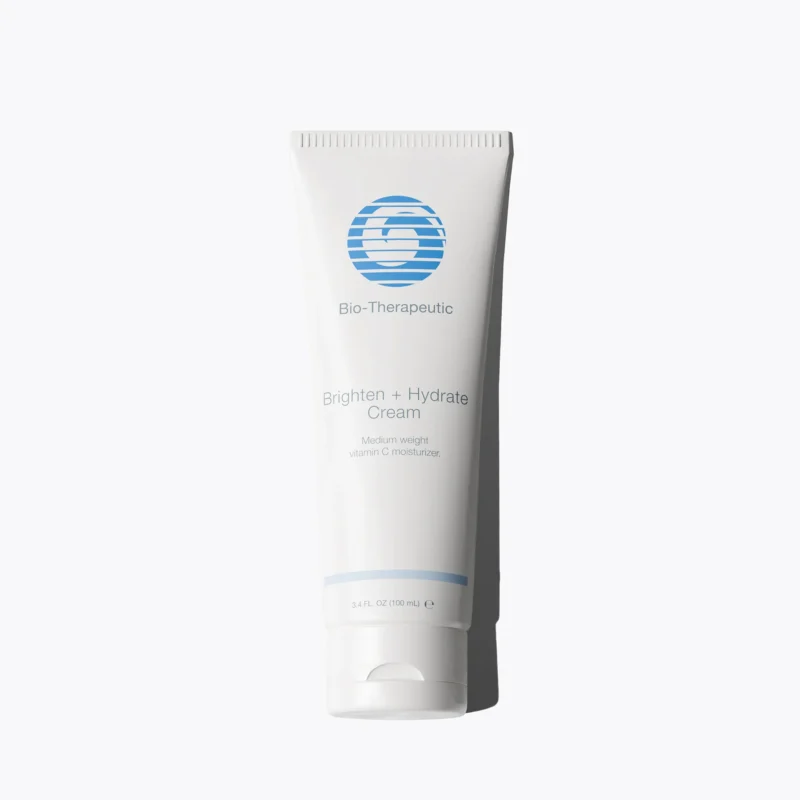 Bio-Therapeutic Brighten + Hydrate Cream Price range: £38.00 through £60.00 VAT inc.
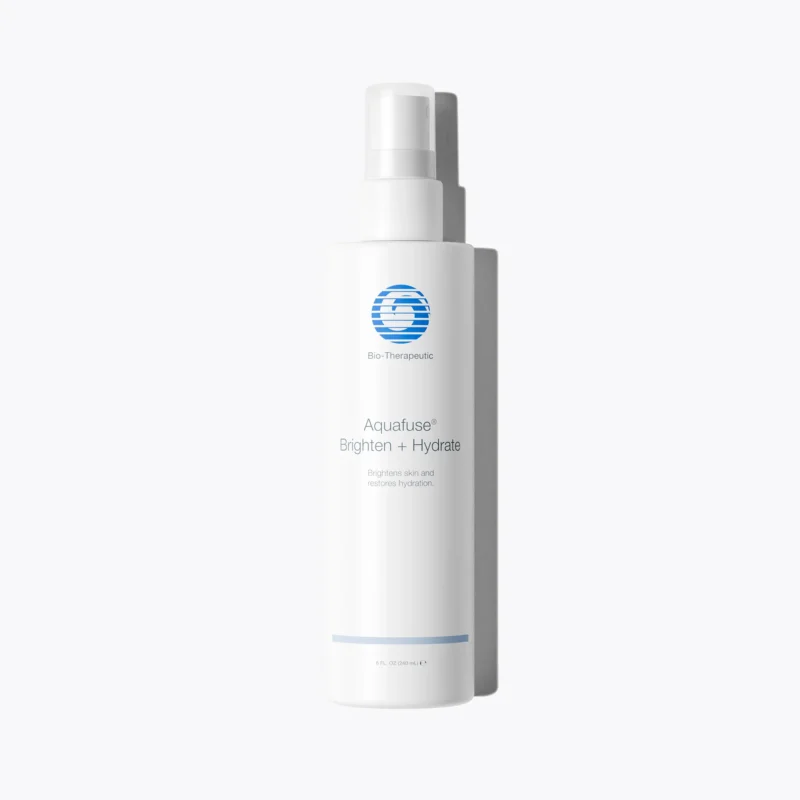 Bio-Therapeutic Aquafuse Brighten + Hydrate Price range: £22.80 through £46.20 VAT inc.
 Bio-Therapeutic bt-infusion Brightening Masque – Box of 10£71.70 VAT inc.
How do you add vitamin C to your morning routine?
- Cleanse with a gentle cleanser.
- Apply your vitamin C toner or serum to clean skin.
- Add a hydrating serum if you use one.
- Moisturise; this can be a vitamin C cream.
- Finish with a broad-spectrum SPF 30 or higher.
For the full step-by-step, read our morning skincare routine order. Vitamin C and sunscreen work as a team, so if you are not yet wearing SPF every day, our article do you really need SPF every day in the UK? is worth five minutes.
Can you use vitamin C with niacinamide, retinol and acids?
- Niacinamide: yes. The old idea that they cancel each other out does not reflect how modern formulas behave, and several Bio-Therapeutic products combine them. Our niacinamide guide explains why it is such a useful partner.
- Hyaluronic acid and peptides: yes, no conflict.
- Retinol or retinal: use at different times; vitamin C in the morning, retinoid at night. See retinal vs retinol.
- AHAs and BHAs: using strong acids and pure vitamin C together can irritate. Keep them on different days or times.
Browse every brightening product on our Bio-Therapeutic page.
Related reading
- Morning Skincare Routine: The Right Order, Step by Step
- Niacinamide: The Multi-Tasker for Pores, Tone and Barrier
- Do You Really Need SPF Every Day in the UK?
- Retinal vs Retinol: The Difference and How to Start
Frequently asked questions
Does vitamin C replace sunscreen?
No. Vitamin C is an antioxidant, not a UV filter, so it cannot stop UV rays reaching your skin. It works best as a partner to sunscreen, adding a layer of antioxidant support underneath it. Always finish your morning routine with a broad-spectrum SPF 30 or higher, even on cloudy days in the UK.
How do I know if my vitamin C serum has gone off?
Pure vitamin C, L-ascorbic acid, oxidises when exposed to air, light and heat. A clear or pale serum that turns dark yellow, orange or brown has likely lost effectiveness. Store it closed, away from sunlight and heat, and use it within the time on the label. Stable derivatives in toners and creams are far less prone to this.
Can vitamin C irritate sensitive skin?
High-strength L-ascorbic acid at a low pH can tingle or sting, especially on sensitive skin. Stable derivatives such as ascorbyl glucoside are much gentler. If your skin is reactive, start with a vitamin C toner or moisturiser rather than a strong serum, use it every other day at first, and patch test before applying to your whole face.
How long does vitamin C take to brighten skin?
Some products give an immediate fresh, glowy look thanks to hydrating and light-reflecting ingredients. A more even-looking tone and less noticeable dark marks take longer, often several weeks of daily use. Consistency and daily SPF matter more than strength, because UV exposure will keep darkening marks if skin is not protected.