The difference between chemical and physical exfoliation is how the dead surface cells are lifted away: chemical exfoliants (AHAs, BHAs and enzymes) loosen the bonds between cells so they shed, while physical exfoliants (scrubs, beads, brushes and devices) buff them off. Neither is better in itself. The right choice depends on your skin type, how sensitive it is and how often you exfoliate.
Key takeaways
- AHAs work on the surface and suit dull, dry or uneven-looking skin; BHAs reach into oily pores and suit congestion.
- Enzymes are the gentlest chemical option and a good starting point for sensitive skin.
- Physical exfoliation gives instant smoothness but needs a light hand: no pressure, no sharp grains.
- Most skin does well with exfoliation once to three times a week, not daily, unless the product is designed for daily use.
- Acid exfoliants can make skin more sensitive to the sun, so daily SPF is non-negotiable.
What does exfoliation actually do?
Your skin renews itself constantly. New cells form in the lower layers and travel up to the surface, where they eventually flake away. When that shedding slows down or becomes uneven, dead cells build up, and skin can look dull, feel rough and take on make-up patchily.
Exfoliation simply helps that process along. Done well, it leaves skin looking brighter and feeling smoother, and it can help the serums and moisturisers you apply afterwards spread more evenly. Done too often or too harshly, it strips the skin barrier, the protective outer layer that keeps moisture in and irritants out.
Chemical vs physical exfoliation: what’s the difference?
Chemical exfoliants use acids or enzymes to dissolve the “glue” that holds dead cells together. You apply them, wait, and the cells loosen without any rubbing. Physical exfoliants rely on friction: grains, beads, a brush or a vibrating device that lifts cells mechanically.
| Type | How it works | Best for | Watch out for |
|---|---|---|---|
| AHAs (glycolic, lactic, malic, tartaric acid) | Water-soluble acids that loosen surface cells | Dullness, rough texture, uneven-looking tone, dry or normal skin | Tingling at first; increased sun sensitivity |
| BHA (salicylic acid) | Oil-soluble acid that works inside the pore lining | Oily, congested skin and visible blackheads | Can feel drying if overused |
| Enzymes (papain, bromelain) | Fruit-derived enzymes that digest surface proteins | Sensitive or reactive skin, beginners | Gentler, so results build more gradually |
| Scrubs and beads | Friction from fine particles | Instant smoothness, normal skin | Pressure and jagged grains can irritate |
| Brushes and ultrasonic devices | Vibration or ultrasonic waves lift debris | Regular deep cleansing, congestion | Overuse; follow the device guidance |
Many good products combine approaches. A cleanser with a low level of acid, or a gel scrub with both enzymes and soft beads, offers a mild double action without the intensity of a peel.
Which exfoliant suits your skin type?
Oily or congested skin
Look for salicylic acid. Because it is oil-soluble, it can work where excess oil and dead cells collect. Our Gel Cleanse contains mild glycolic and salicylic acids in a gentle foaming base, so you get a light, everyday exfoliating effect simply from washing your face. If blackheads are your main concern, our guide to clearing pores at home without damage goes further.
Dull, dry or uneven-looking skin
AHAs are your friend. Lactic acid is often considered the gentler, more hydrating option, while glycolic acid is smaller and works more quickly. The Aquafuse FoamPeel blends lactic, glycolic, malic and tartaric acids in an airy foam, and it is designed to pair with an ultrasonic scrubber for a salon-style resurfacing step.
Sensitive or reactive skin
Start with enzymes and skip grains entirely at first. The Enzyme Exfoliant uses papain with papaya and pineapple extracts in a lipid-rich base that feels cushioning rather than scratchy. Our routine for sensitive, reactive skin explains how to introduce any new step slowly.
Normal skin that likes a polish
A hybrid works well. The Exfoliate Papaya Enzyme Gel Scrub combines papaya enzymes with smooth jojoba beads and soothing allantoin, and it is gentle enough for regular use.
How often should you exfoliate your face?
There is no single number, but a sensible rule is to start low and build up. Most people do well with a dedicated exfoliating step once or twice a week, rising to three times if skin stays comfortable. Products designed for daily use, such as a mildly acidic cleanser, are formulated at gentler levels.
- Begin with one session a week for two weeks.
- If skin feels comfortable, with no stinging, tightness or flaking, add a second session.
- Never exfoliate on the same night as a retinoid until you know your skin tolerates both.
- Skip exfoliation entirely if skin is sunburnt, broken, freshly waxed or irritated.
Seasons matter too. Central heating and cold wind can leave skin more fragile in winter, so you may want to reduce frequency then.
Can you combine chemical and physical exfoliation?
Yes, but not carelessly. Using an acid toner, a grainy scrub and a peel on the same evening is a common route to an irritated barrier. A better approach is to choose one main exfoliating step per session and let the rest of your routine be soothing and hydrating.
Devices are the exception when used as designed. A sonic brush or ultrasonic scrubber paired with a suitable cleanser or foam gives a controlled, even result. The bt-sonic GEN2 comes with two silicone heads, one infused with corundum for an extra exfoliating boost, so you can switch between a gentle everyday cleanse and a polishing cleanse. For a deeper treatment, our guide on how to use an ultrasonic skin scrubber explains the Exfol mode step by step.
You can explore the full range of professional cleansers, exfoliants and devices on our Bio-Therapeutic page.
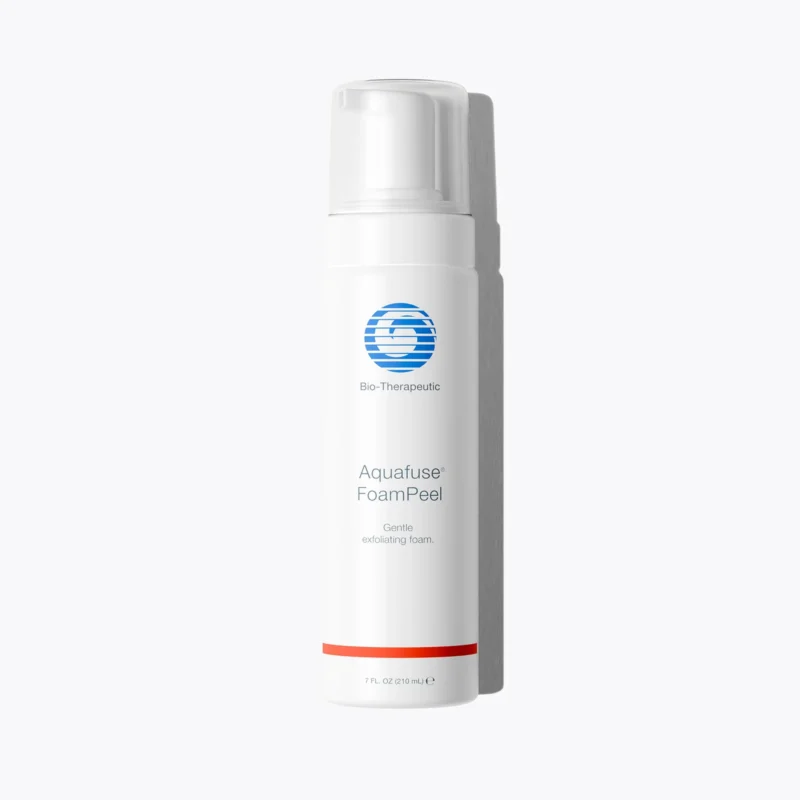 Bio-Therapeutic Aquafuse FoamPeel – AHA Exfoliating Foam Price range: £48.90 through £68.50 VAT inc.
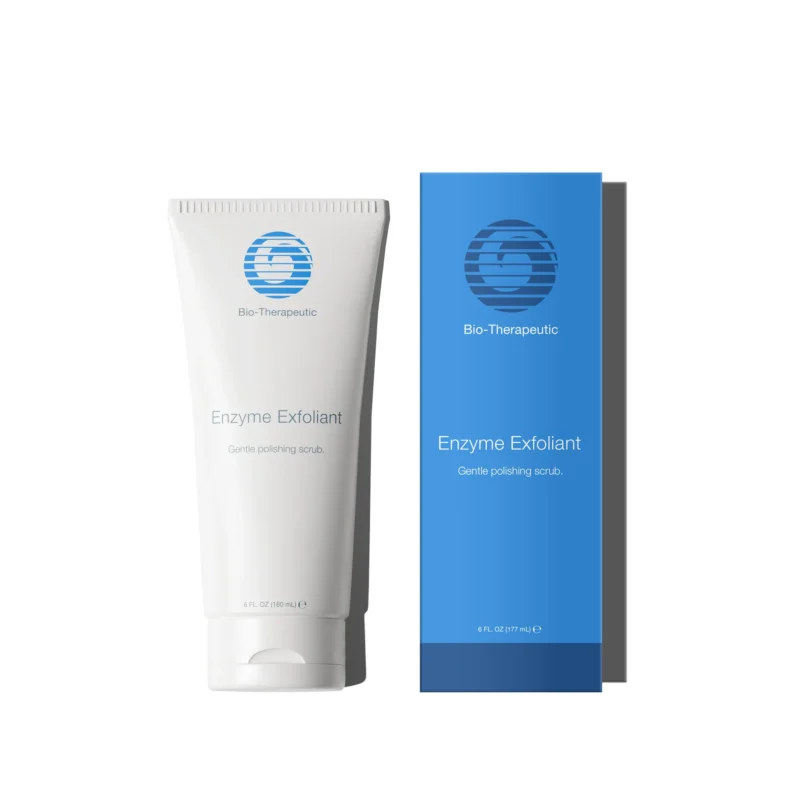 Bio-Therapeutic Enzyme Exfoliant – Gentle Enzyme Face Polish£39.80 VAT inc.
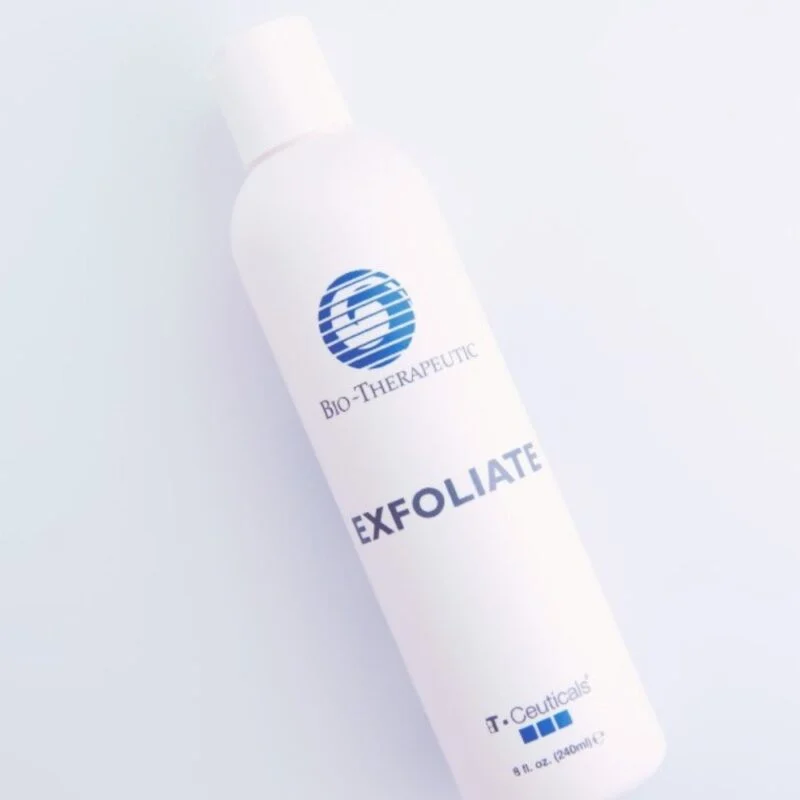 Bio-Therapeutic bt-ceuticals® Exfoliate – Papaya Enzyme Gel Scrub£44.30 VAT inc.
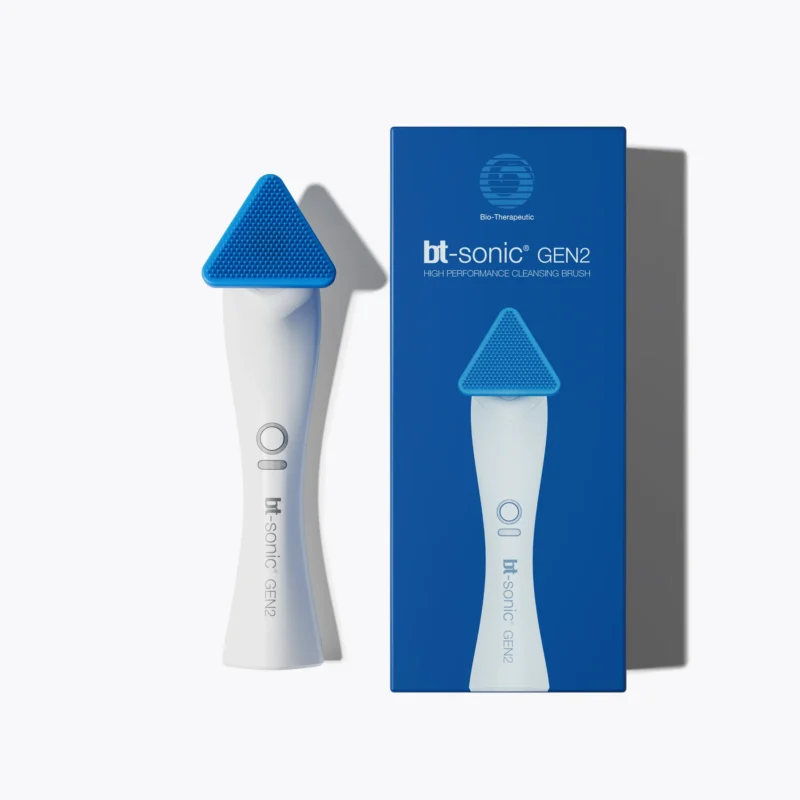 Bio-Therapeutic bt-sonic GEN2 Advanced Microsonic Cleansing Brush£209.90 VAT inc.
What are the signs of over-exfoliation?
Over-exfoliation is more common than under-exfoliation, especially with today’s wide choice of acid products. Watch for:
- Stinging when you apply products that never used to sting.
- A tight, “squeaky” feel after cleansing.
- A shiny, almost waxy look that isn’t oil.
- Redness, flaking or new patches of sensitivity.
- Breakouts that seem to appear out of nowhere.
If you notice these, stop all exfoliants for a week or two. Cleanse gently, use a calming, hydrating serum and a comforting moisturiser, and wear SPF. Our guide to repairing a damaged skin barrier sets out a simple recovery routine. If skin is very inflamed, cracked or doesn’t settle, check with a GP or pharmacist.
Why do you need SPF after exfoliating?
Freshly exfoliated skin has had some of its outer layer removed, and AHAs in particular are known to increase sensitivity to the sun. UVA reaches the UK all year round, even on grey days, so a broad-spectrum sunscreen each morning protects the brighter, smoother skin you have been working for. Our article on whether you really need SPF every day in the UK explains why it matters in January as much as July.
A simple order to remember: exfoliate in the evening, hydrate and moisturise afterwards, and protect with SPF the next morning.
Related reading
- How to Use an Ultrasonic Skin Scrubber at Home (3 Modes Explained)
- Blackheads and Congestion: How to Clear Pores at Home Without Damage
- The Calm Routine: Skincare for Sensitive, Reactive Skin
- How to Repair a Damaged Skin Barrier: Signs and a Gentle Routine
Frequently asked questions
Is chemical exfoliation better than a face scrub?
Not automatically. Chemical exfoliants give a more even result without rubbing, which many people find kinder, especially on sensitive or congested skin. A well-formulated scrub with smooth, round particles can be perfectly gentle if you use light pressure. The best choice is the one your skin tolerates comfortably and that you will use consistently, not the strongest option on the shelf.
Can I use an AHA and a BHA together?
You can, and some products combine them at low levels, such as a mildly acidic cleanser. Layering a strong AHA product with a strong BHA product in the same routine increases the chance of irritation, though. If you want both, try alternating evenings, or use a gentle acid cleanser daily and keep a stronger exfoliant for once or twice a week.
Should I exfoliate in the morning or at night?
Evening is usually best. It gives your skin the night to settle, avoids layering an exfoliant directly under make-up, and means you won’t head straight into daylight with freshly exfoliated skin. If you do exfoliate in the morning, finish with a broad-spectrum SPF and avoid using a retinoid that same evening.
Are enzyme exfoliants suitable for sensitive skin?
Enzyme exfoliants are often the first choice for sensitive skin because they work gradually and don’t rely on acids or friction. That said, everyone reacts differently, so patch test on a small area such as behind the ear or along the jaw first. Start with one session a week and increase only if your skin stays calm and comfortable.
Do I need to exfoliate if I use a cleansing brush?
A sonic cleansing brush already gives a light physical exfoliating effect, so you may need a separate exfoliant less often. Many people find a daily brush cleanse plus a gentle enzyme or acid step once a week is plenty. If your skin starts to feel tight or look red, reduce the separate exfoliating step first.